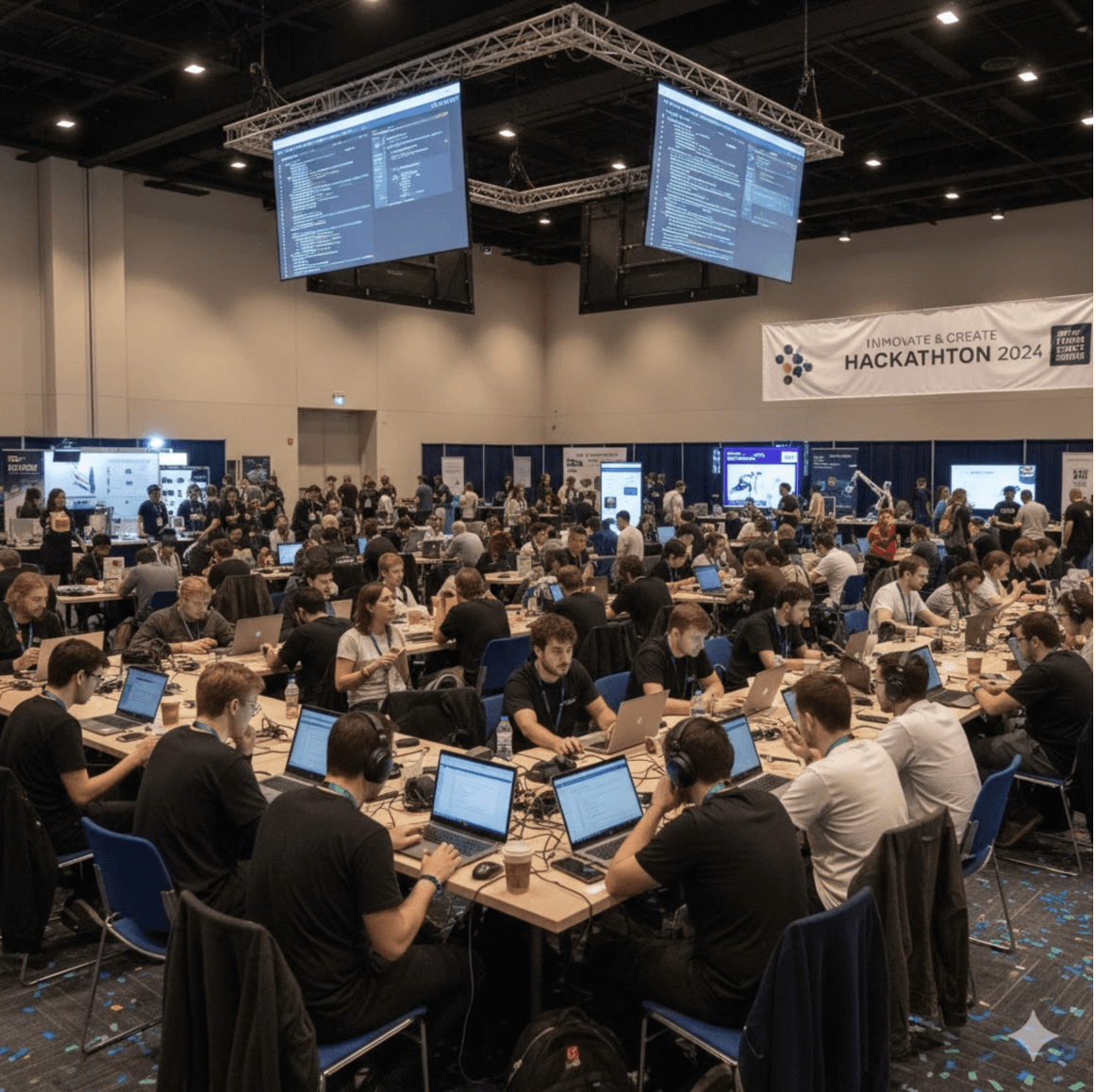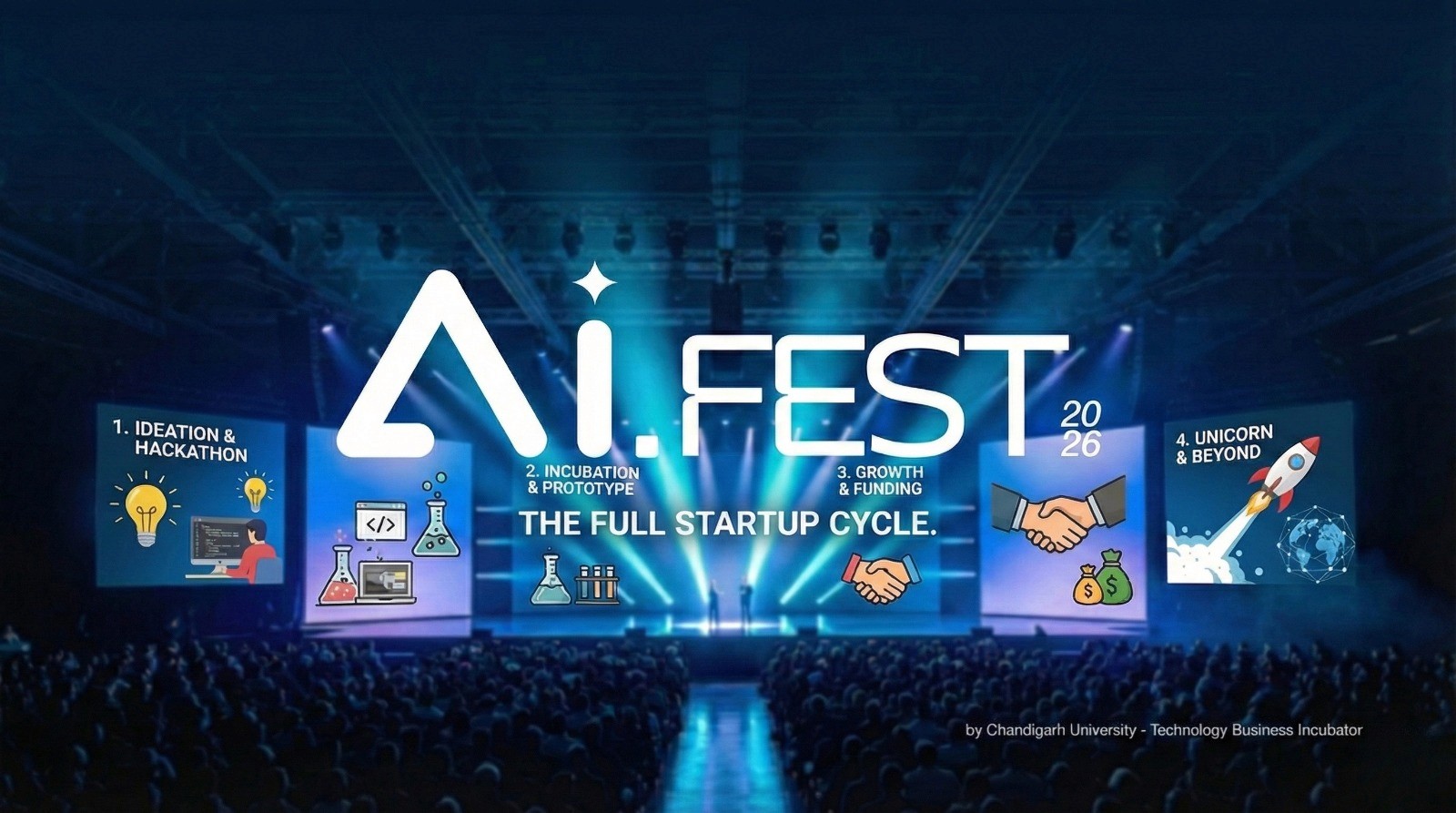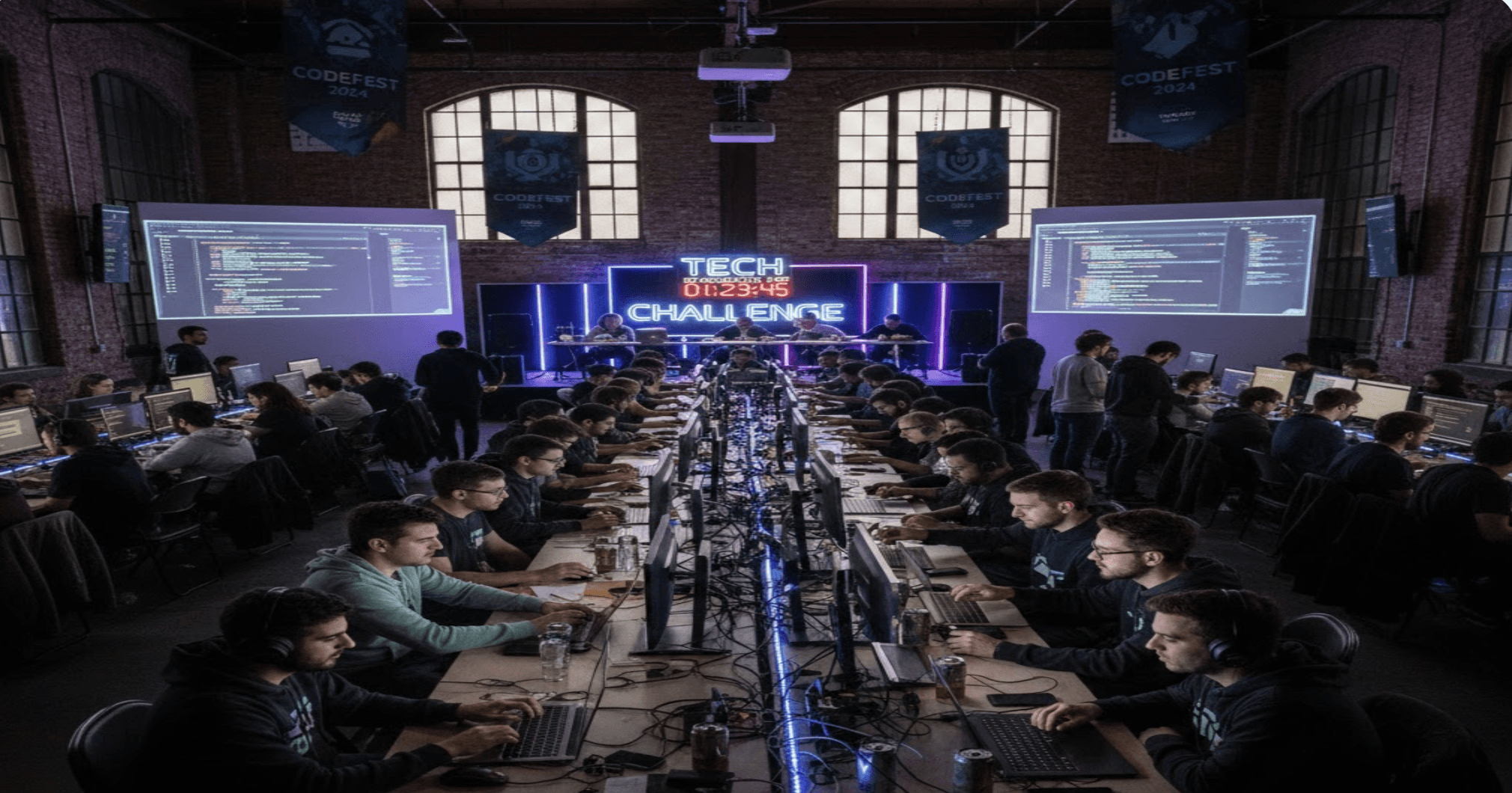
February 2026. While India’s AI ecosystem takes shape through high-level policy discussions and national frameworks, something different is brewing at Chandigarh University. A three-day convergence where the gap between strategy and execution finally closes. Where student founders don’t just talk about building companies - they actually start building them.
AI FEST 2026 is a bridging moment. Critical one. While high-level stakeholder discussions in Delhi and Mumbai shape India’s AI governance and deployment strategies, this three-day festival translates that strategic intent into tangible founder support. It’s not another tech fest. It’s infrastructure for transformation, positioned precisely when Innovation for Viksit Bharat demands execution-level mechanisms, not just ministerial announcements.
The Campus-to-Capital Chasm India Must Bridge
India’s startup ecosystem has a well-documented problem: brilliant campus innovation dies in the gap between student project and funded venture.
Universities produce thousands of AI projects annually. Hackathons generate impressive demos. Research papers propose novel solutions. Then nothing happens.
The disconnect isn’t talent - India’s AI talent pool rivals any globally. It’s infrastructure. Students lack pathways from campus to capital. They pitch at competitions designed for performance theater, not investment decisions. They win certificates, not term sheets.
The Indian startup ecosystem’s geographic concentration in Bangalore and Delhi NCR makes this worse. Leaves talent in Punjab, North India, and tier-two cities struggling for visibility.
As national conversations around AI democratization and inclusive innovation accelerate - themes echoing through India’s major policy forums throughout early 2026 - events like AI FEST 2026 become operationally critical. But one initiative within this artificial intelligence festival stands out for its potential to fundamentally reshape campus entrepreneurship.
Campus Tank.
Campus Tank: The National Student Startup Platform India Needs
Three days. One AI journey.
Campus Tank isn’t an addition to AI FEST 2026. It’s the reason the entire festival exists.
While AI research conferences and policy panels provide context, Campus Tank provides consequence - moving young founders from idea or MVP to funded, supported ventures in a compressed, high-stakes environment.
The program sits at a powerful intersection: Apna, Venture Catalysts, and Chandigarh University. This isn’t ceremonial partnership. Each entity brings specific capability. Venture Catalysts delivers access to India’s venture networks and investment expertise. Apna contributes product thinking at scale and deep understanding of user behavior in Indian markets. Chandigarh University provides the academic foundation and talent pipeline.
What makes Campus Tank fundamentally different from the hundreds of student tech fest India competitions is simple: the stakes are real.
Finalists pitch live on February 21, 2026 - AI FEST’s closing day to actual investors making actual investment decisions. No simulation. No participation trophies. Real capital, real mentorship, real exposure to India’s venture ecosystem.
India’s national student competition landscape is cluttered with events that simulate entrepreneurship without delivering its substance. Students prepare pitch decks. Judges ask polite questions. Winners celebrate. Life continues unchanged.
Campus Tank rejects this model entirely. It’s designed as a serious alternative to superficial pitch competitions, recognizing that young founders deserve the same rigor, feedback, and opportunity as experienced entrepreneurs.
The program structure reflects this seriousness. Selected finalists don’t just present they defend. They face questions about unit economics, customer acquisition costs, regulatory compliance, competitive moats.
For AI solutions competition participants specifically? This means addressing data privacy, explaining technical differentiation in an age of model commoditization, justifying compute costs, proving market understanding beyond technical capability.
This intensity serves a purpose. Campus Tank functions as a bridge between campus innovation and India’s venture ecosystem a bridge that’s been missing from the national innovation architecture. Students accustomed to academic evaluation suddenly face commercial scrutiny. Ideas validated in university labs face market reality. Technical excellence meets business viability.
The timing matters enormously. Campus Tank happens as AI FEST 2026 concludes, meaning founders have spent three days immersed in conversations about AI deployment, ethical frameworks, sector applications, and ecosystem building. Exactly the context needed to sharpen their pitches.
They’ve attended panels on AI in healthcare, finance, infrastructure. Heard founders discuss real challenges in scaling AI products. Networked with investors already primed to discover emerging talent.
For students across India considering this AI hackathon India opportunity, Campus Tank represents something rare: legitimate pathway from campus to venture backing. It’s validation that serious innovation can emerge from Chandigarh University, from Punjab institutions, from North India campuses. Not just IITs or metros.
It’s proof that geography matters less than execution when infrastructure exists to surface talent.
The case study competition elements within Campus Tank force additional rigor. Founders must demonstrate not just technical capability but business acumen. They analyze market landscapes, competitive positioning, go to market strategies. They think through distribution channels, pricing models, partnership frameworks.
It’s the kind of thinking that differentiates fundable ventures from impressive demos.
Why This Matters for India’s AI Future Now
As India accelerates its digital transformation with major stakeholder convenings throughout early 2026 establishing frameworks for responsible AI deployment and ecosystem growth the country faces a strategic choice.
Consume AI products built elsewhere, or architect AI futures built here.
Campus Tank suggests India is choosing architecture. By creating structured pathways from campus to capital, especially for AI founders working on India-specific problems within Indian constraints, the program increases the probability that India’s next AI companies emerge domestically.
This aligns perfectly with broader national priorities being shaped at the highest levels of government and industry. Innovation for Viksit Bharat only works if it translates down to student and founder levels if ministerial visions become actual programs, actual capital, actual support.
Campus Tank is that translation.
The program also addresses a critical equity issue. India’s AI innovation conversations often center on metro ecosystems, established accelerators, well connected founders. Campus Tank deliberately creates visibility for talent outside traditional networks. It signals that Chandigarh University can be a launching pad. That investors will travel to Punjab for quality deals. That the Indian startup ecosystem’s future is geographically distributed.
For the finalists pitching on February 21, 2026, Campus Tank represents transformation. For investors attending, it’s deal flow from unexpected sources. For AI FEST 2026 overall, it’s validation that the festival creates tangible outcomes, not just inspirational moments.
But perhaps most importantly? For India’s national innovation architecture, Campus Tank demonstrates how campus-level entrepreneurship programs should function in 2026. Not as theatrical pitch competitions but as serious founder support infrastructure aligned with venture reality.