Building Tomorrow's Cities: How AI is Engineering the Future of Urban Infrastructure at AI Fest 2026
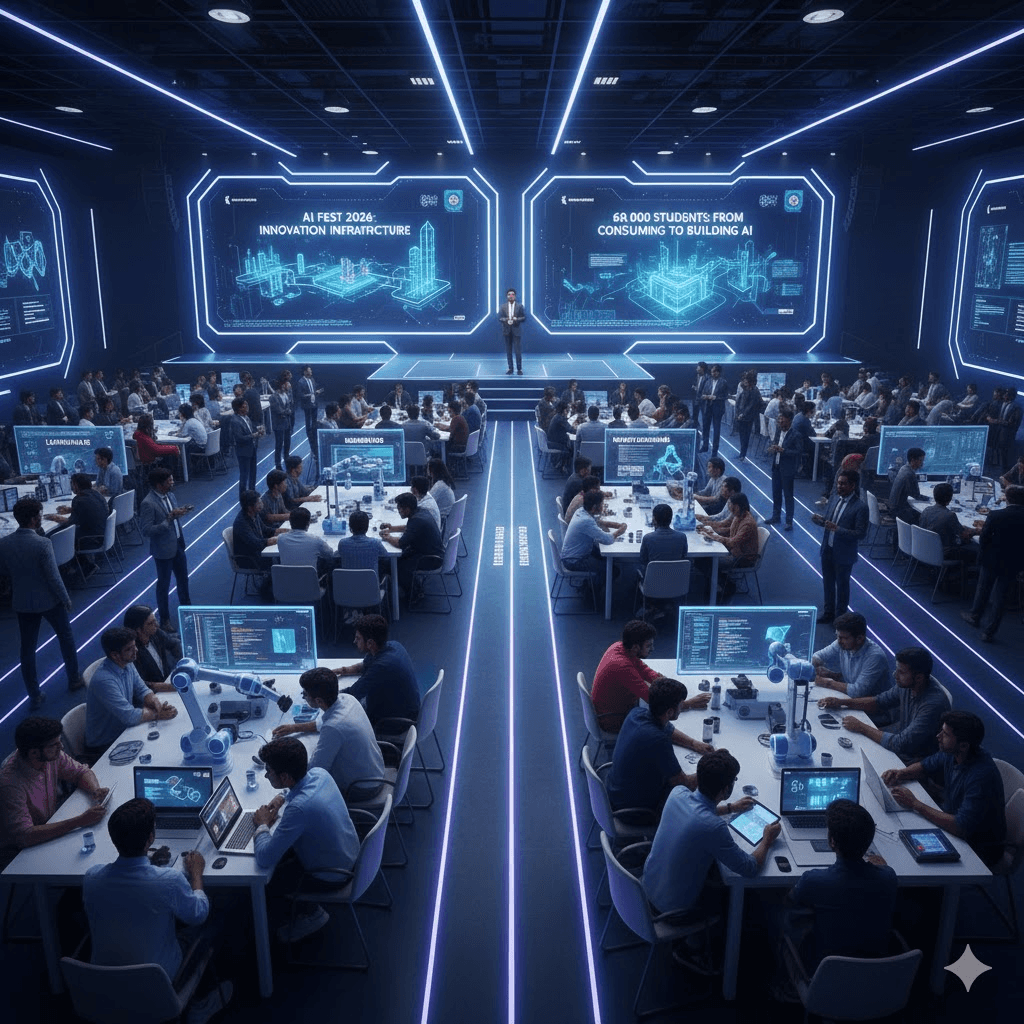
The convergence of artificial intelligence and urban development is no longer a futuristic concept it's happening now. As Chandigarh University prepares to host AI Fest 2026, one of India's most anticipated tech summits, a groundbreaking panel discussion promises to unravel how AI innovation is fundamentally restructuring our approach to infrastructure, civil engineering, and smart city development. This isn't just another tech conference; it's a national event that brings together the brightest minds in the AI industry, innovation labs, and emerging tech to chart the course for Industry 4.0 and beyond.
The Sentiment Structure: Understanding the Emotional Intelligence Behind Urban AI
When we talk about sentiment structure in the context of AI applications for urban ecosystems, we're addressing something profound: how artificial intelligence doesn't just process data it interprets the emotional, social, and environmental pulse of entire cities. This AI Fest 2026 panel discussion, featuring founders and startups, real estate leaders, governance bodies, and architectural visionaries, explores how AI models are being trained to understand not just the technical requirements of infrastructure but the human sentiment embedded within urban spaces.
The sentiment structure framework examines how AI systems analyze patterns in community feedback, environmental data, traffic flow psychology, and citizen engagement to create infrastructure that responds to actual human needs. It's the difference between a smart city that simply functions and one that truly serves its inhabitants. This tech innovation approach combines data science, big data analytics, and algorithms that process sentiment alongside hard metrics creating solutions that are both technically sophisticated and emotionally intelligent.
AI Driven Sustainability: From Theory to Implementation
At the heart of this innovation summit discussion lies a critical question: How can generative AI and AI tools transform our approach to climate resilience? The panel explores cutting edge AI solutions that optimize energy grids with unprecedented precision. These AI platforms analyze consumption patterns, predict demand fluctuations, and automatically adjust distribution to minimize waste and maximize renewable energy integration.
The circular economy model, enhanced by AI development, represents a paradigm shift in how we view resources. Machine learning algorithms track materials throughout their lifecycle, identifying opportunities for reuse, recycling, and regeneration. This isn't theoretical AI research presented at tech workshops and AI training sessions across the innovation ecosystem has demonstrated that AI powered circular systems can reduce waste by up to 70% while cutting infrastructure costs significantly.
Cloud computing and edge computing technologies enable real time processing of environmental data, allowing cities to respond immediately to changing conditions. IoT sensors embedded throughout urban infrastructure feed data to AI systems that predict maintenance needs before failures occur, optimize water distribution during droughts, and even adjust building systems to reduce carbon footprints automatically. This digital transformation represents the practical application of AI trends discussed at tech events and innovation challenges nationwide.
Autonomous Systems: The New Workforce in Urban Development
The rise of robotics and autonomous systems in industrial automation marks another revolution explored in this tech fest segment. AI powered construction robots are already transforming how we build, working alongside human teams in human machine collaboration that enhances safety and efficiency. These systems, guided by computer vision and AI models trained on thousands of construction scenarios, can work in hazardous conditions, perform precision tasks, and adapt to unexpected challenges.
Traffic management represents perhaps the most visible application of autonomous AI systems. Smart technology deployed in cities worldwide uses 5G technology and advanced analytics to monitor traffic flow, predict congestion, and adjust signal timing in real time. But the innovation platform goes deeper: AI projects now integrate public transit optimization, emergency vehicle routing, and even pedestrian flow management to create truly integrated transportation ecosystems.
The panel discussion brings together perspectives from the AI competition winners and AI challenge participants who've developed breakthrough solutions in this space. These tech solutions demonstrate how automation enhanced by quantum computing capabilities can process the massive datasets required for city wide autonomous system coordination.
Stakeholder Perspectives: Building the Future Together
What makes this AI workshop session particularly valuable is its multi stakeholder approach. Founders and startups bring disruptive thinking and agile AI applications that challenge conventional approaches. Real estate leaders contribute market insights and investment perspectives on scalable tech projects. Governance and central bodies address policy frameworks, regulatory considerations, and the public interest dimensions of AI deployment. Architectural leaders bridge the gap between technology and human-centered design, ensuring that AI innovation serves aesthetic and functional purposes.
This innovation community collaboration exemplifies what makes university competition events like AI Fest 2026 so crucial. It's not just a coding competition or programming contest it's where the tech ecosystem converges to solve real problems. The hackathon culture, design challenges, and case competitions that characterize such tech marathons create an innovation lab atmosphere where prototype competitions yield solutions that actually get implemented.
The Technical Pathway: Infrastructure for AI Infrastructure
Building AI ready cities requires addressing fundamental technical challenges. Cybersecurity becomes paramount when entire urban systems depend on interconnected AI platforms. The panel examines how blockchain technology can create secure, transparent frameworks for managing the vast amounts of sensitive data flowing through smart city systems. Quantum computing promises to solve optimization problems that current systems can't handle routing millions of autonomous vehicles, modeling climate scenarios, or coordinating energy grids across regions.
The tech industry leaders participating in this innovation fest recognize that AI development requires robust infrastructure. Edge computing reduces latency for time critical applications like autonomous vehicle coordination. Cloud computing provides the computational power for training complex AI systems. 5G technology ensures the bandwidth and reliability needed for real time data transmission across urban IoT networks.
Investment and Policy: Making Innovation Sustainable
The discussion doesn't shy away from practical realities. AI research requires sustained funding. Tech education and tech skills development need institutional support. The innovation center concept creating physical and virtual spaces where the developer community can collaborate requires investment from both public and private sectors. The panel explores how prize competitions, startup challenges, and pitch competitions can identify promising tech trends while providing funding pathways.
Policy frameworks must evolve alongside technology. The inter-university fest atmosphere of AI Fest 2026 provides an ideal setting for governance bodies to engage with the student competition participants and academic competition winners who represent tomorrow's tech platform developers. This campus competition environment fosters the kind of creative challenge problem-solving that leads to breakthrough innovation projects.
The Future Tech Vision
As this on campus event and national competition demonstrates, the future of urban infrastructure lies at the intersection of AI systems, human creativity, and collaborative innovation. The live event programming, virtual competition elements, and hybrid event format of AI Fest 2026 ensure that this conversation reaches beyond Chandigarh University to influence the broader innovation ecosystem.
The sentiment structure of future cities the emotional and social intelligence embedded in AI driven infrastructure will determine whether we create urban spaces that truly enhance human life or merely optimize technical metrics. This regional competition of ideas, this showcase event of emerging tech, represents more than just another tech summit. It's where the AI future takes shape, one innovation sprint at a time.