
The future of work is not something that will arrive tomorrow it is already shaping how India hires, learns, and builds talent today.
Across industries, artificial intelligence is quietly redefining careers. Job roles are evolving, skill requirements are shifting, and the traditional path from education to employment is being rewritten in real time. For students, young professionals, and even experienced workers, this change brings uncertainty but also immense possibility. The real question is not whether AI will transform work, but whether people will be prepared to grow alongside it.
This is where AI Fest 2026 finds its purpose.
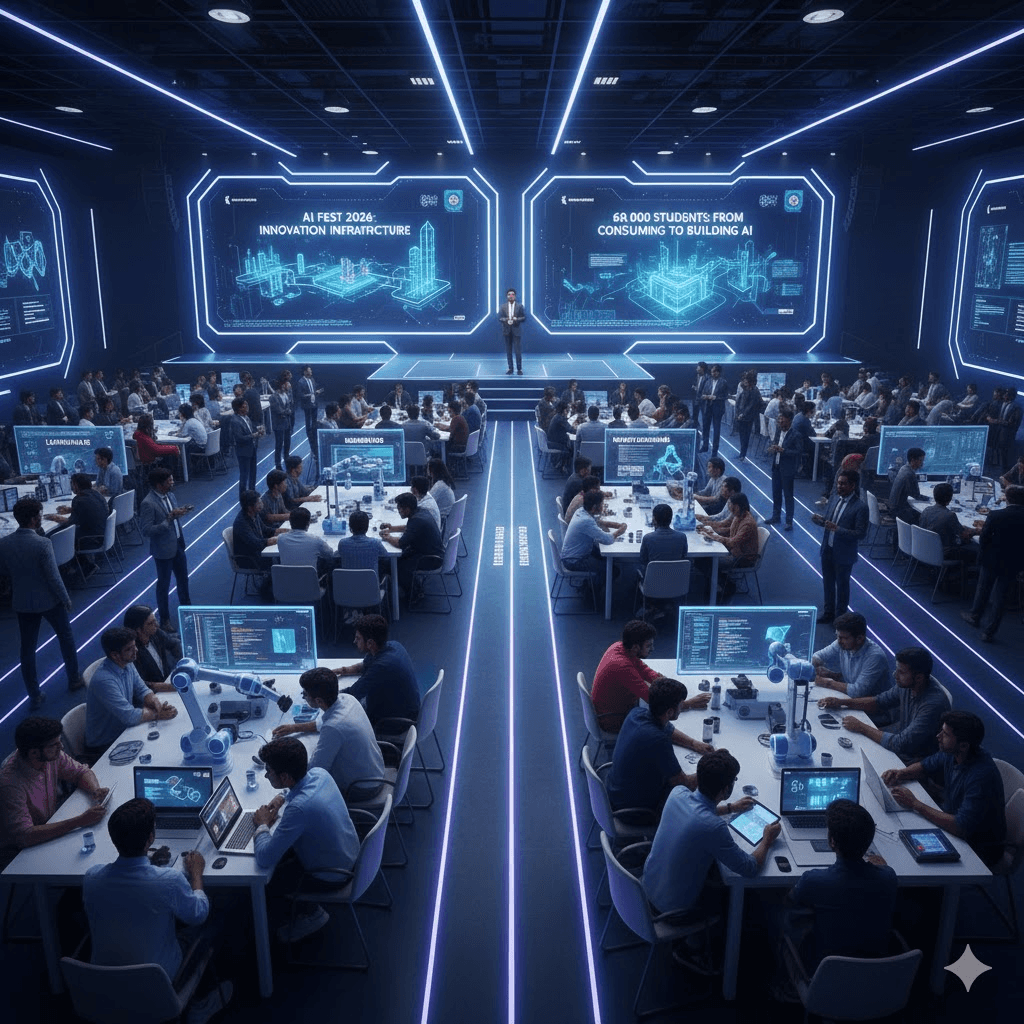
Hosted at Chandigarh University, AI Fest is more than an Artificial Intelligence Festival or a student tech gathering. It is a national platform focused on AI & the Future of Work, bringing together students, startups, educators, industry leaders, policymakers, and global thinkers to explore how India can turn AI-led disruption into long-term employment resilience. The conversations, collaborations, and innovations emerging here reflect a broader national dialogue on skills, technology, and the evolving nature of work.
India’s demographic strength lies in its youth, but a young population alone does not guarantee progress. Skills must evolve at the same pace as technology. Automation is not eliminating work altogether; instead, it is reshaping what employability looks like. Careers today demand adaptability, continuous learning, and comfort with intelligent systems. Recognizing this urgency, AI Fest February 2026 focuses not just on showcasing technology, but on empowering people to remain relevant in a rapidly automated world.
One of the most impactful shifts being explored at AI Fest 2026 is the transformation of hiring itself. In a country as diverse and large as India, recruitment has often been inefficient, credential-driven, and inaccessible for many capable candidates. Emerging startups at the fest are using AI to make hiring smarter and fairer focusing on skills, potential, and real capabilities rather than just resumes. These AI-driven hiring and HR-tech solutions aim to reduce bias, improve talent discovery, and create scalable employment pathways for students, fresh graduates, and professionals alike. In doing so, they directly strengthen employment resilience across sectors.
Equally important is how people learn and reskill. Traditional education models struggle to keep pace with how quickly job roles change. At AI Fest Chandigarh University, many innovations focus on personalized skilling platforms that adapt to individual learners. These AI-powered systems understand strengths, identify gaps, and align learning paths with real industry demand. For students, this means education that feels relevant and practical. For working professionals, it means the ability to reskill continuously without stepping away from their careers. Learning becomes a lifelong companion rather than a one-time phase.
Beyond hiring and skilling lies a deeper layer of transformation understanding the workforce itself. Workforce intelligence systems showcased at AI Fest use data and machine learning to anticipate future skill needs, identify employment gaps, and support smarter decision-making for institutions and policymakers. Such insights are critical for a nation preparing for the next decade of growth. Instead of reacting to job disruptions after they occur, India can proactively plan for emerging roles and industries. These conversations naturally connect with broader national and global dialogues on AI readiness, economic resilience, and responsible adoption dialogues that extend beyond the fest into larger impact-driven forums shaping the future of work.
Education, too, is being reimagined. One of the most common concerns among students today is whether what they study will actually prepare them for real jobs. Adaptive education technologies presented at AI Fest 2026 aim to bridge this gap. By using AI-based assessments, real-time feedback, and industry aligned insights, these systems help students transition more smoothly from campus to career. The result is graduates who feel confident and prepared, rather than anxious and uncertain about their future.
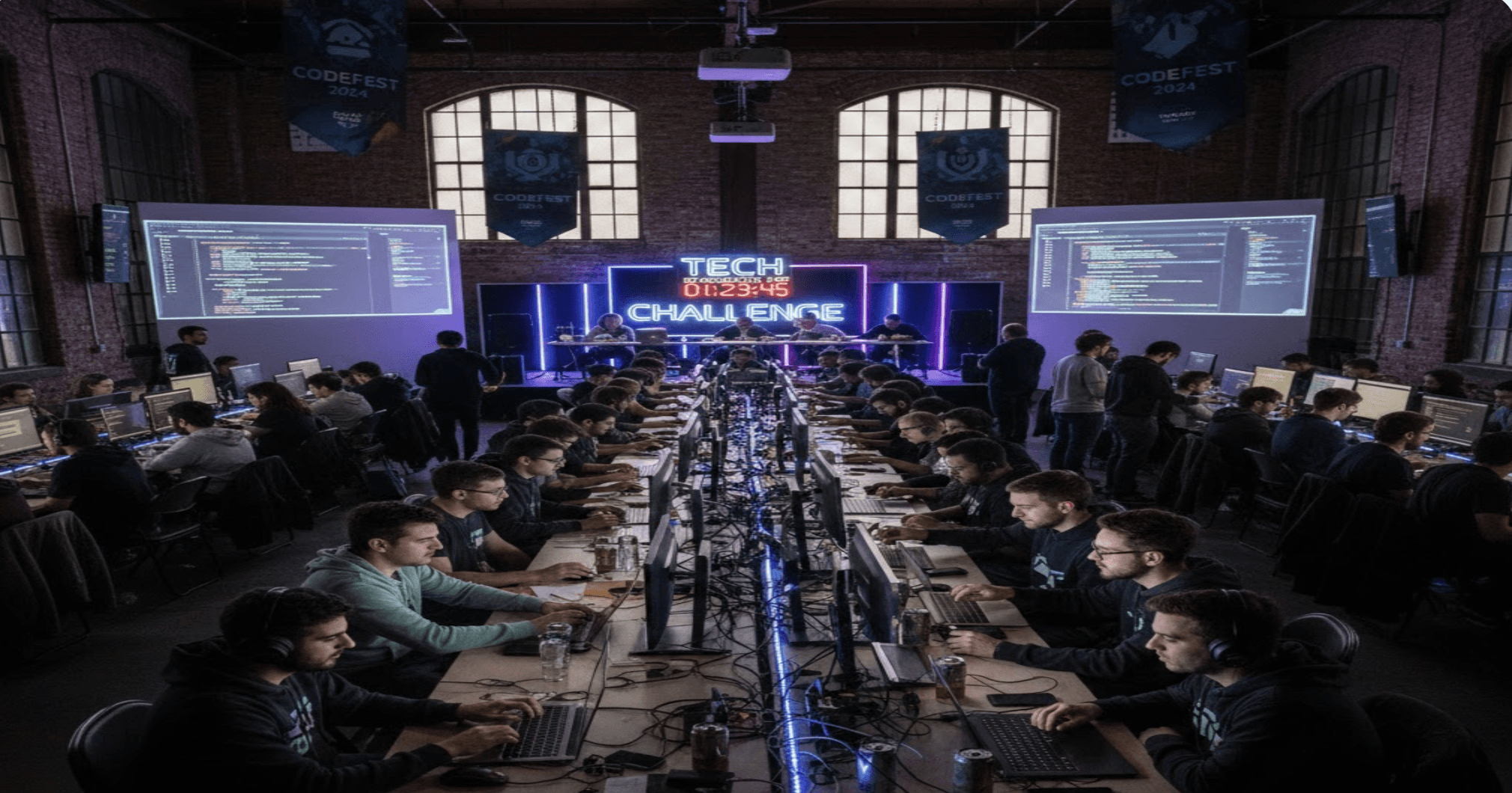
What truly sets AI Fest apart from a typical student tech fest in India is what happens after innovation is showcased. Through national hackathons, AI solutions competitions, and case study challenges, ideas are not treated as endpoints. Instead, they are nurtured through mentorship, exposure to investors, and real world validation. This approach transforms innovation into execution and positions AI Fest as a meaningful technology entrepreneurship event rather than just a competitive platform.
In the end, the future of work will be shaped not just by algorithms, but by how thoughtfully humans engage with them. At AI Fest Chandigarh University, that future is being explored with responsibility, inclusivity, and ambition. For anyone who cares about jobs of tomorrow, skills that truly matter, and India’s long-term workforce growth, AI Fest 2026 is not just an event to attend it is a conversation worth being part of.