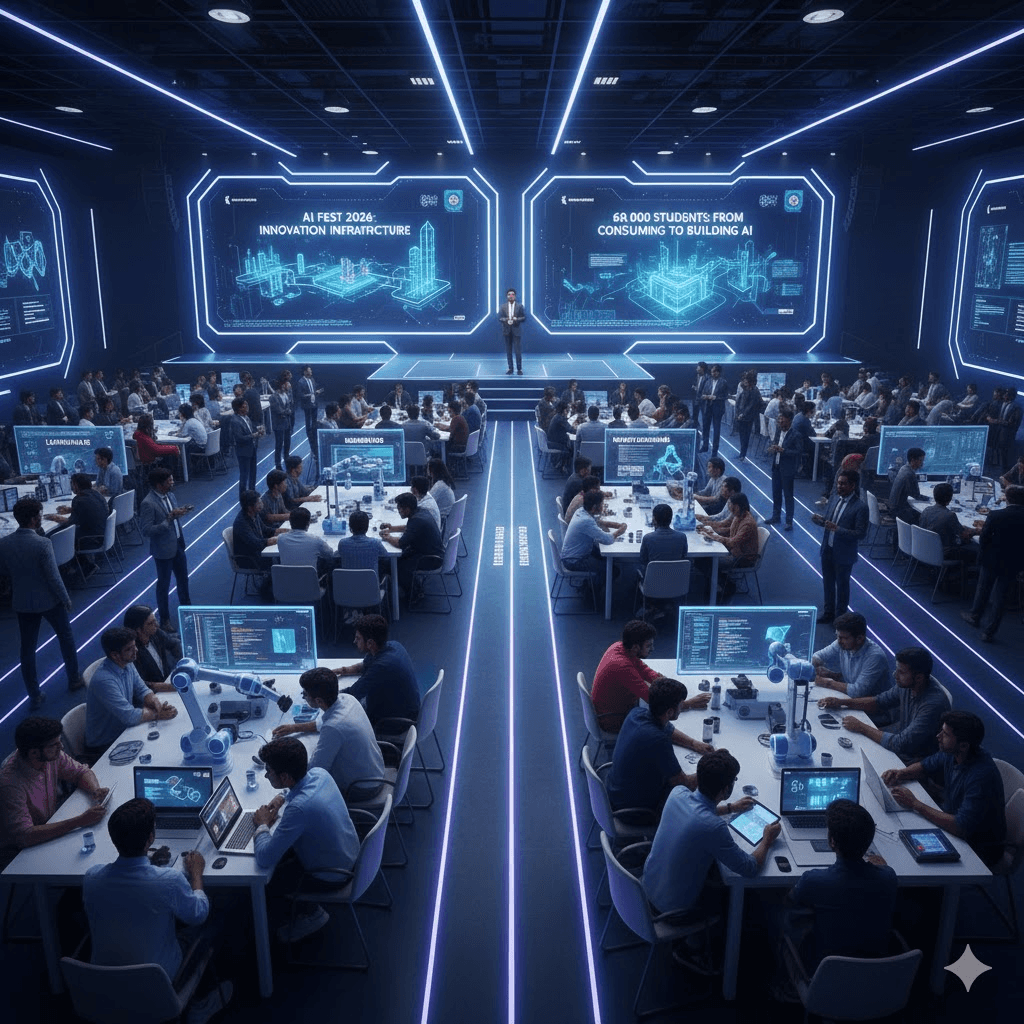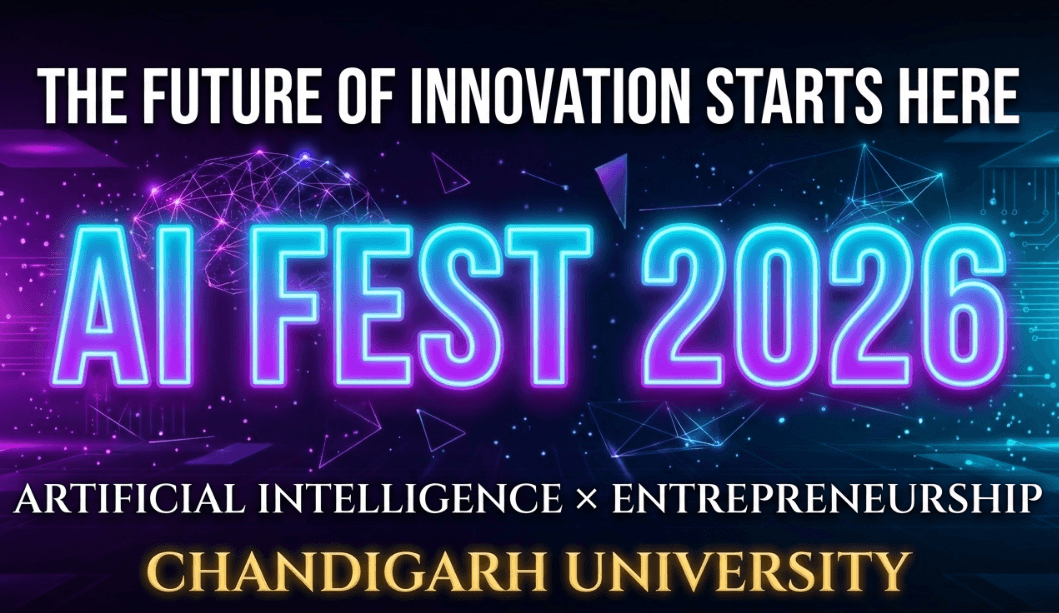
February 19-21 at Chandigarh University proves AI innovation happens at the edges, not the center
The traditional narrative around artificial intelligence goes like this: computer scientists build it, everyone else uses it. AI FEST 2026 is systematically dismantling this assumption, and the implications extend far beyond one campus event.
The Discipline Problem
Here's what most AI conferences get wrong: they optimize for computer science students and assume everyone else is just an end-user. Panel discussions skew technical. Networking favors engineers. Job fairs target coding bootcamp graduates. The message is clear if you're not writing Python, you're not building AI.
AI FEST 2026's programming tells a different story. Look at the panel lineup: "Sentient Structure: AI in Infrastructure & Smart Cities" targets civil engineering and architecture students. "Future of Disruptive Healthcare" brings together nutrition, physiotherapy, optometry, nursing, pharmacy, and biotechnology students. "Assets & Algorithms: AI Reshaping Finance Operations" connects business school students studying fintech with media students and cybersecurity specialists.
This isn't token inclusion. It's strategic recognition that AI's most significant applications emerge when domain expertise meets technical capability. A pharmacy student understands medication adherence challenges that no computer scientist would think to solve. A civil engineer sees infrastructure optimization problems invisible to someone who's never worked with physical constraints.
The Four Themes Framework
What makes AI FEST 2026's structure brilliant is its thematic organization. Instead of "AI Technologies" as an umbrella, the event divides into four narratives:
Evolving AI with Evolving Humans asks how AI augments human capability rather than replaces it. This resonates with students worried about displacement and focuses on the creator economy, future of work, and entrepreneurship.
Ethics, Trust & Governance brings law students, media students, and policymakers into technical conversations about data sovereignty, privacy, and regulation. These aren't separate tracks they're integrated discussions where legal frameworks shape technical possibilities.
AI-Engineered Reality showcases real-world deployment across healthcare, finance, infrastructure, and consumer experiences. This is where architecture students see AI applications in smart buildings, where nursing students explore AI-assisted diagnostics.
Technical Frontiers serves the builders demystifying agents, platforms, emerging technologies, and no-code systems. Critically, the "No Code Platform" session explicitly invites participation from students without deep programming backgrounds.
Why Cross-Disciplinary Matters Now
As AI capabilities commoditize foundation models become accessible, no-code tools proliferate competitive advantage shifts to application intelligence. Knowing where to apply AI matters more than knowing how to build it from scratch. A physiotherapy student who identifies AI applications in rehabilitation has more startup potential than a computer scientist building yet another chatbot wrapper.
AI FEST 2026's 60,000 participants span disciplines most tech events ignore: forensic science, medical lab technology, nutrition and dietetics, optometry. When these students engage with AI not as passive users but as potential builders the surface area for innovation expands dramatically.
The Real Disruption
The disruptive element of AI FEST 2026 isn't its scale. It's the implicit assertion that AI innovation doesn't require permission from computer science departments. It requires curiosity, domain knowledge, and access to the right infrastructure mentorship, capital, technical enablement.
By creating parallel tracks for every major discipline, by structuring cohorts around healthcare and media rather than just "AI applications," by featuring panels that speak directly to civil engineers and pharmacists and designers, AI FEST 2026 democratizes participation in AI's development.
The question isn't whether your discipline belongs in AI conversations. February 19-21, 2026 , the answer is definitive: if you understand a problem worth solving, you belong exactly where the building happens.
AI FEST 2026. Every discipline. One platform. Infinite possibilities.