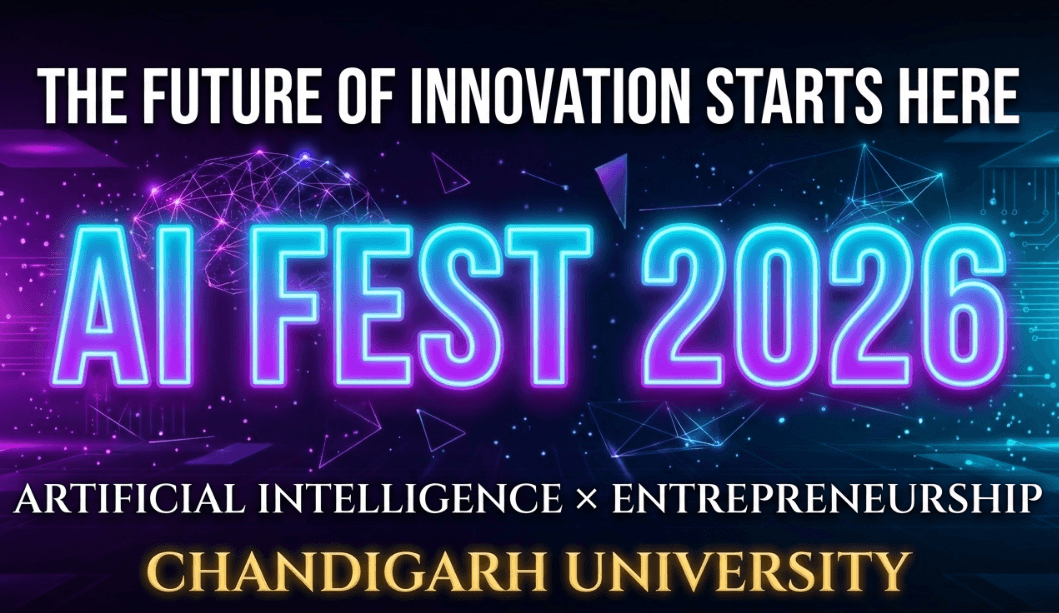
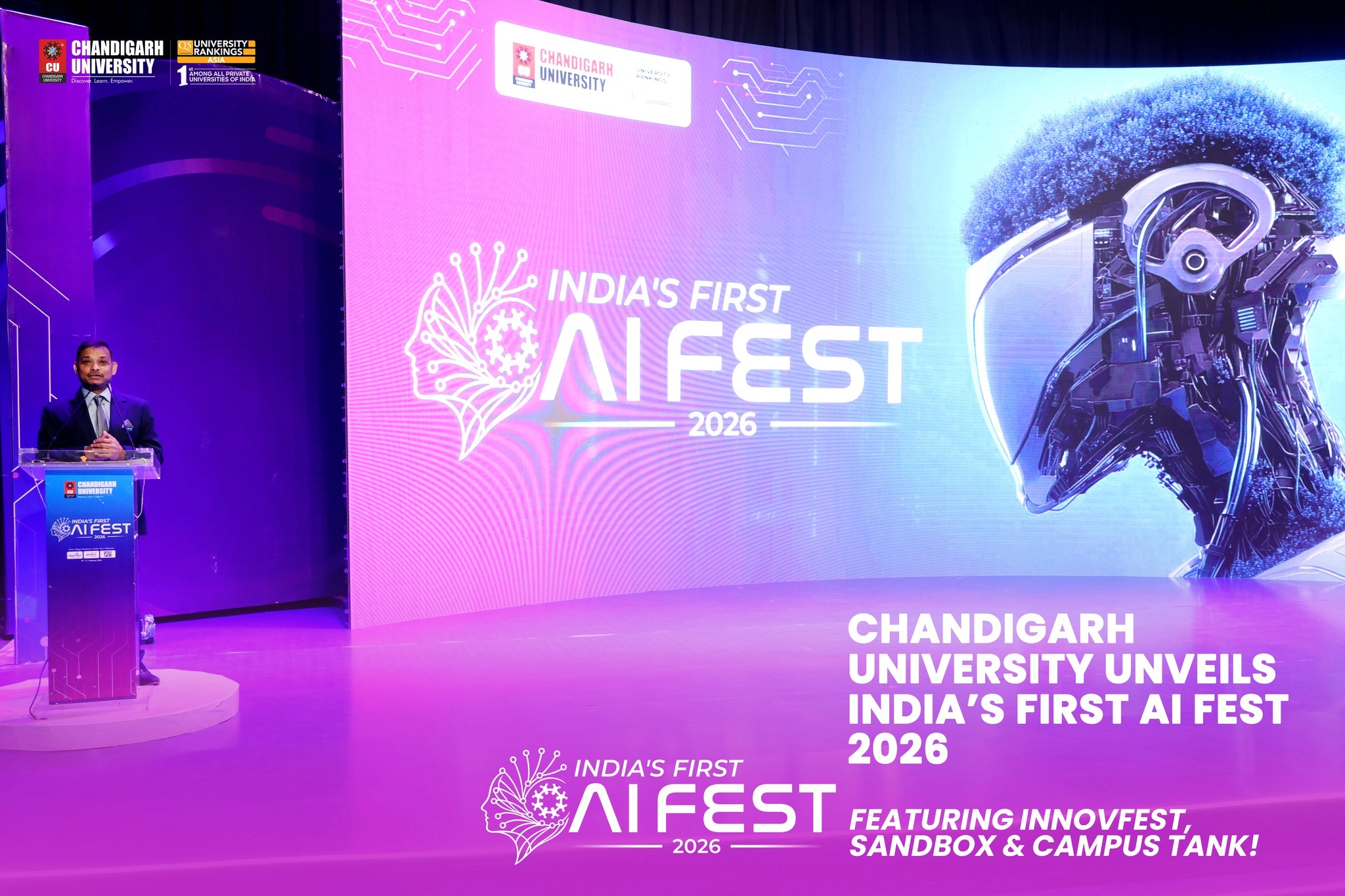
AI Fest 2026 at Chandigarh University is not just another technology festival instead it is emerging as a full-scale student-led innovation economy. Over three days in February 2026, the campus transforms into a living ecosystem where ideas move from whiteboards to prototypes, from pitches to policy conversations.
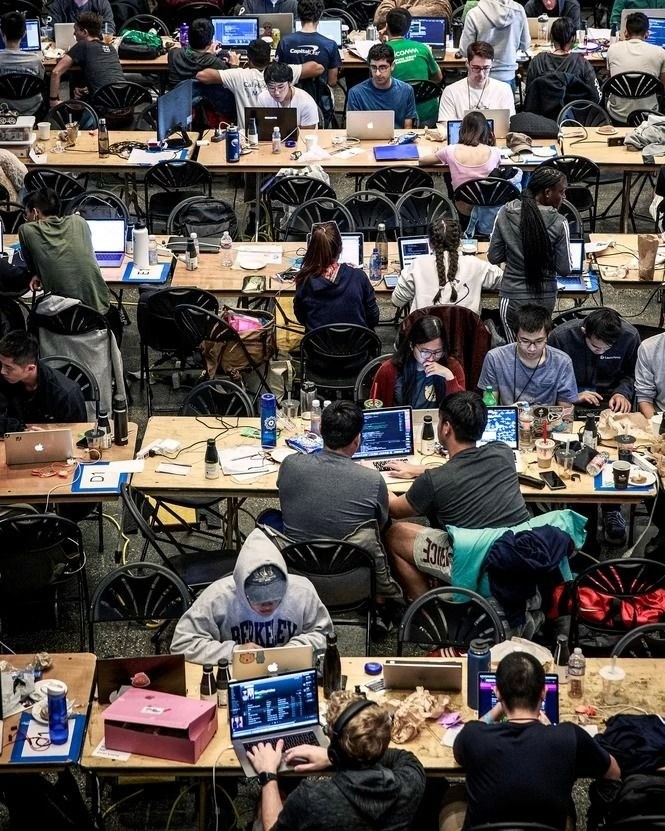
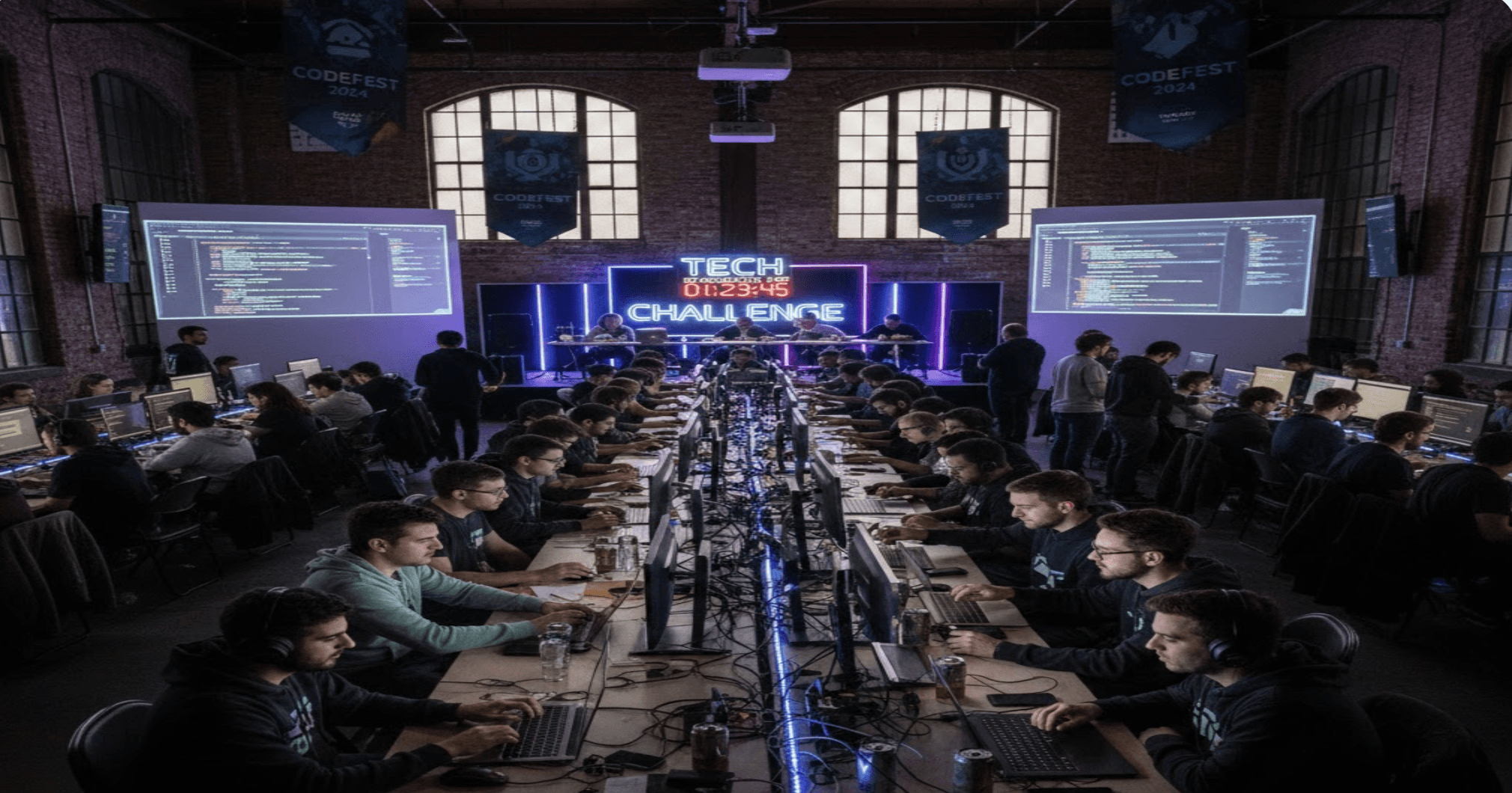
Unlike traditional tech events that focus only on talks, AI Fest 2026 integrates national hackathons, startup demo days, research showcases, and live product launches under one umbrella. Students don’t attend as spectators but they participate as builders, founders, designers, coders, and strategists. Events like AI Hack Matrix, Genesis-X, Campus Tank, SandBox and Resilient India Challenge ensure hands-on innovation across AI, robotics, fintech, healthcare, sustainability, and smart infrastructure.
What sets this fest apart is its scale and intent. With participation from engineering, management, design, law, healthcare, and research scholars, AI Fest 2026 becomes a cross-disciplinary innovation lab, reflecting how real-world AI systems are actually built. From AI-powered healthcare diagnostics to smart city simulations and climate resilience tools, the problems tackled here mirror national priorities like Viksit Bharat, Digital India, and Atma Nirbhar Innovation.
For students across India, this is more than a competition , it’s an early entry into the startup ecosystem, industry networks, and research pathways. For institutions and industry leaders, it’s a glimpse into the next generation of Indian innovators being trained not just to code, but to create impact.
AI Fest 2026 isn’t loud about it but it’s quietly redefining how innovation festivals in India should work.